Introduction :
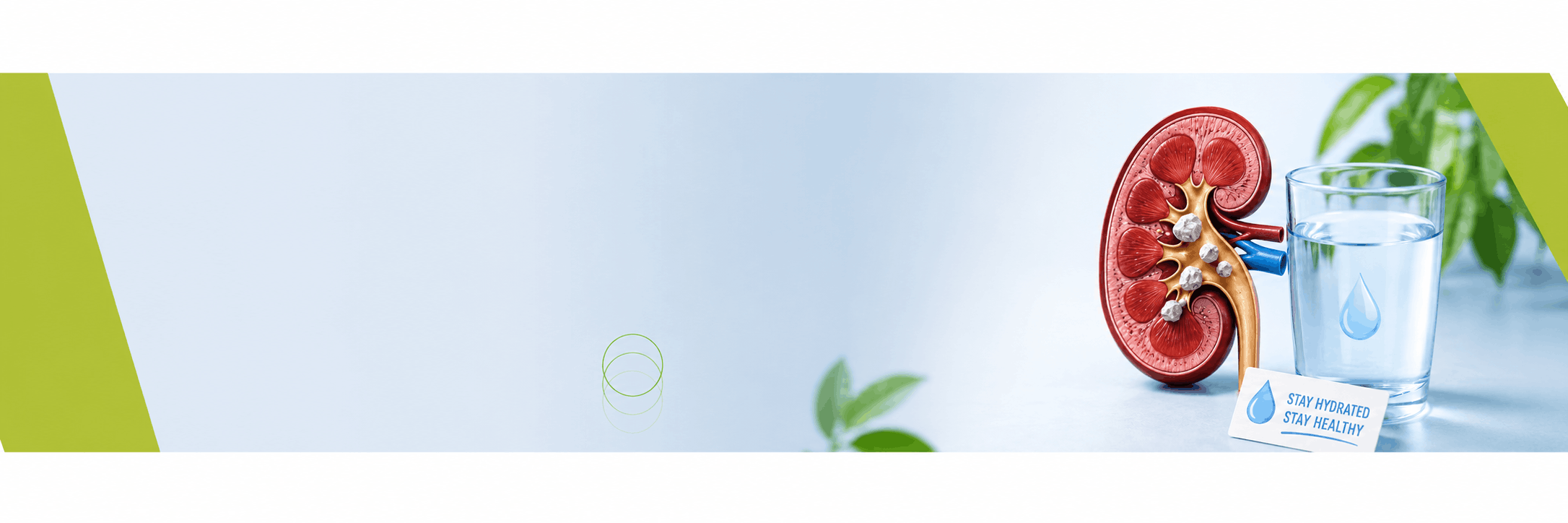
Can drinking less water cause kidney stones? Yes, not drinking enough water can increase your risk of developing kidney stones. When you are dehydrated, your body produces less urine. This makes substances such as calcium, oxalate and uric acid more concentrated, allowing crystals to form and potentially grow into stones.
However, dehydration is not the only cause. Diet, family history, certain medical conditions, medications and previous kidney stones can also increase your risk.
How Does Dehydration Cause Kidney Stones?
Think of urine as a mixture of water and dissolved minerals. When you drink enough water, these substances remain diluted and are more easily removed from the body.
When you drink too little, your urine becomes concentrated. This makes it easier for crystals to form and eventually develop into kidney stones.
The risk can be higher in hot and humid places such as Mumbai because sweating causes additional fluid loss.
How Much Water Should You Drink?
There is no exact amount that works for everyone.
For people who are prone to kidney stones, doctors commonly recommend drinking enough fluid to produce around 2–2.5 litres of urine per day. This may mean drinking more than 2.5 litres of fluid, especially if you exercise, sweat heavily or spend time outdoors.
You don't necessarily need to force yourself to drink exactly 3 litres every day.
People with certain kidney, heart or other medical conditions may need different fluid limits, so individual medical advice is important.
Is Dark Yellow Urine a Sign You Need More Water?
It can be.
Pale-yellow urine generally suggests adequate hydration, while consistently dark urine can indicate that you may need more fluids.
However, urine color is not a perfect medical test. If you have recurrent kidney stones, your doctor may recommend urine and blood tests to understand your individual risk.
What Are the Symptoms of Kidney Stones?
Small stones may cause no symptoms. When a stone moves through the urinary tract, symptoms can include:
- Severe pain in the side, back or lower abdomen
- Pain that moves toward the groin
- Blood in the urine
- Pain while urinating
- Frequent urination
- Nausea or vomiting
Fever and chills along with suspected kidney stones require urgent medical evaluation, as they may indicate an infection with urinary obstruction.
Can Drinking Water Remove Kidney Stones?
Water can help maintain urine flow and may help some small stones pass naturally.
However, drinking water does not automatically dissolve an existing kidney stone.
Treatment depends on the stone's size, location and whether it is causing obstruction or other complications.
What Is the Treatment for Kidney Stones?
Some small kidney stones can pass naturally with medical supervision and appropriate medication.
Larger or problematic stones may require procedures such as:
Shock Wave Lithotripsy (SWL): Uses shock waves to break a stone into smaller fragments.
Ureteroscopy: A small instrument is passed through the urinary tract to reach and remove or break the stone.
Laser Lithotripsy: A laser can fragment the stone during ureteroscopy.
PCNL: A minimally invasive procedure commonly used for larger or complex kidney stones.
The right treatment should be decided by a qualified urologist after imaging and evaluation.
Kidney Stone Treatment in Mumbai
If you are searching for kidney stone treatment in Mumbai, consult a qualified urologist rather than relying only on home remedies.
Your evaluation may include an ultrasound or CT scan, urine tests and blood tests. These help determine the stone's size, location and whether the kidney or urinary tract is blocked.
The goal is not only to remove the current stone but also to understand why it formed and how to prevent future stones.
How Can You Prevent Kidney Stones?
The simplest step is to stay consistently hydrated throughout the day.
You should also avoid excessive salt, maintain a balanced diet and follow your doctor's recommendations based on your specific type of kidney stone.
Lemon and other citrus fruits contain citrate, which may help prevent certain types of stones, but lemon water should not be considered a cure.
Frequently Asked Questions
Can drinking less water cause kidney stones?
Yes. Low fluid intake reduces urine volume and makes stone-forming substances more concentrated, increasing the risk.
Is 3 litres of water enough to prevent kidney stones?
Not necessarily. Fluid requirements vary. People prone to stones are generally advised to produce around 2–2.5 litres of urine daily, depending on individual circumstances.
Can water dissolve kidney stones?
Water does not dissolve every kidney stone. It can help maintain urine flow and may assist some small stones in passing naturally.
What is the best treatment for kidney stones?
Treatment depends on the stone's size and location. Options can include observation, medication, SWL, ureteroscopy, laser lithotripsy and PCNL.
When should I see a kidney stone doctor?
See a doctor if you have severe or persistent pain, blood in your urine, repeated vomiting, difficulty passing urine, fever or chills.
Conclusion
Drinking too little water can increase your risk of kidney stones, especially in hot climates where you lose more fluid through sweating. Staying adequately hydrated is one of the simplest ways to reduce your risk.
But if you already have a kidney stone, don't assume that drinking more water will remove it. The appropriate kidney stone treatment depends on the stone's size, location and your overall health.
If you experience severe pain, blood in the urine, fever or difficulty passing urine, seek medical attention from a qualified urologist. For patients looking for kidney stone treatment in Mumbai, proper diagnosis is the first step toward safe and effective treatment.
