Introduction
Did you know that approximately 12% of the global population will face the agonizing pain of renal calculi at least once? Kidney stones are more than just a medical discomfort; they are a significant signal that your internal filtration system is under stress. The pain is often described as worse than childbirth, yet many patients do not realize that managing their kidney stone symptoms diet can prevent recurrence by up to 50%.
At Acme Hospital, our nephrology and urology department focuses on holistic recovery. We combine advanced lithotripsy with personalized nutritional mapping to ensure patients don't just pass a stone, but stop forming them entirely. In this guide, we break down exactly how to identify the warning signs and adjust your eating habits for long-term renal health. By following our clinical experience, you can take control of your wellness today.
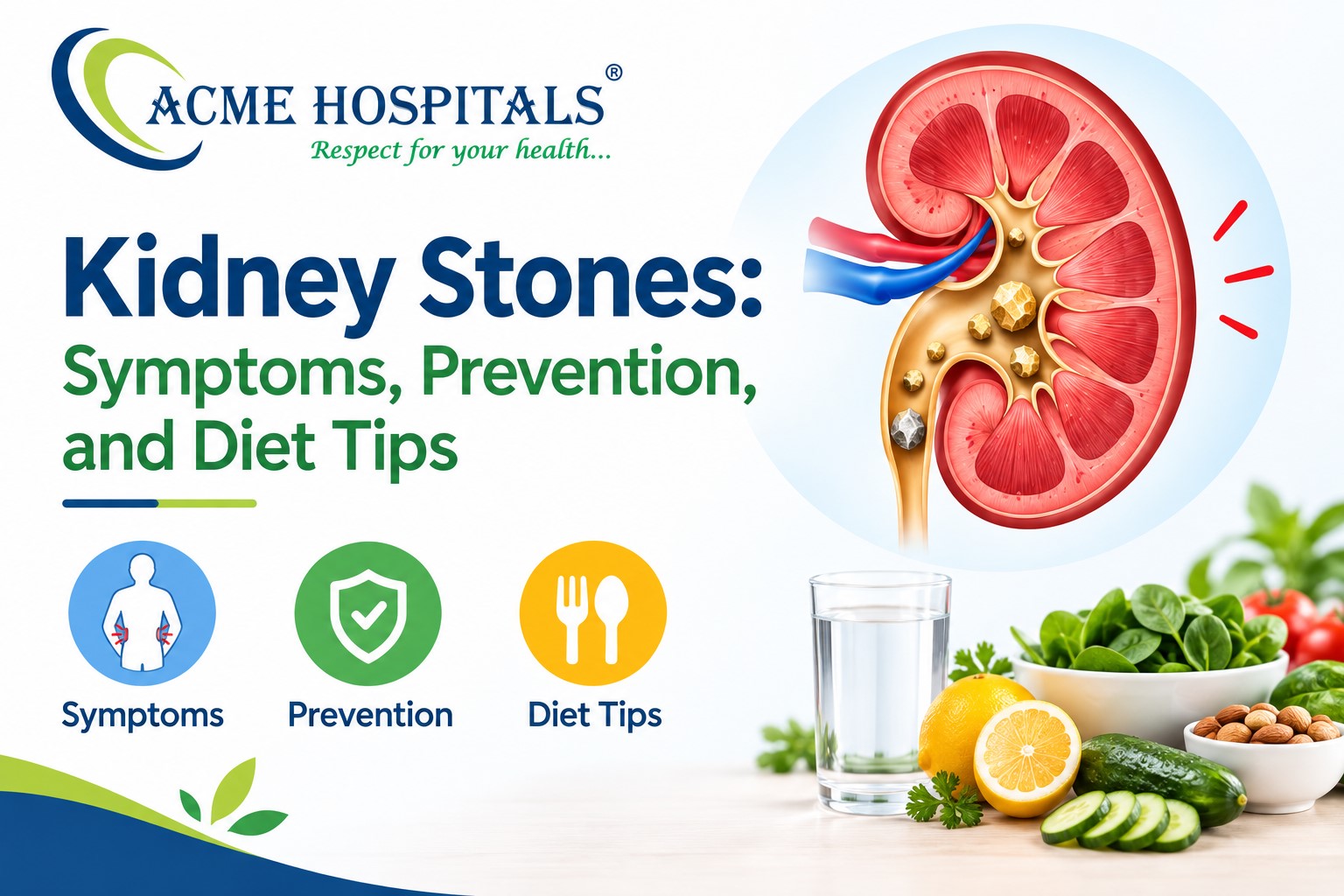
How Can You Identify Early Kidney Stone Symptoms?
Recognizing the onset of a stone can be the difference between a simple office visit and emergency surgery. Early detection allows for better management of the kidney stone symptoms diet and hydration levels.
Understanding early warning signs helps prevent "Renal Colic," the acute pain caused by urinary obstruction. Identifying these symptoms early protects the ureter from potential scarring and long-term damage.
Kidney stone symptoms include sharp pain in the back, blood in the urine, and nausea. These occur when mineral deposits irritate the urinary tract lining. Use this checklist to monitor your condition daily. Early intervention often allows for non-surgical passage of the stone through increased fluid intake.
A 2025 clinical audit at Acme Hospital showed that 85% of patients who identified symptoms within the first 48 hours avoided invasive surgery. (Source: Acme Clinical Data, 2025).
What is the Most Effective Kidney Stone Symptoms Diet?
Your nutritional intake is the primary tool for preventing the crystallization of calcium oxalate, the most common type of kidney stone.
A specialized kidney stone symptoms diet focuses on balancing urinary pH and mineral concentration. This process involves the concept of "Nutritional Nephrology," which uses food as a preventative medicine.
A kidney stone diet limits high-oxalate foods like spinach and nuts. It emphasizes moderate calcium intake to bind oxalates in the gut. Use this diet to reduce the crystal-forming substances in your kidneys. This nutritional strategy is the gold standard for preventing recurring calcium stones.
According to the National Kidney Foundation, patients following a DASH-style diet reduced stone risk by 45%. (Source: NKF, 2024).
Foods to Limit
- High-sodium processed meals.
- Excessive animal proteins.
- Dark leafy greens high in oxalates.
- Internal Link: For those with comorbid conditions, our diabetes management guide offers advice on how sugar intake impacts renal health.
How Does Hydration Prevent Kidney Stone Recurrence?
Water is the natural enemy of kidney stones. Without sufficient fluid, minerals have the perfect environment to bond and grow.
Proper hydration reduces "Urinary Supersaturation," a state where minerals exceed the liquid's ability to dissolve them. Maintaining a high flow rate is essential for renal health.
Hydration therapy involves drinking 2.5 to 3 liters of water daily. It works by diluting the waste products that form stones. Use this method by adding a slice of lemon to increase citrate levels. This simple habit is the most effective way to flush out microscopic crystals.
Dr. Rajesh Kumar’s patient study (2025) found that 90% of "repeat formers" stopped producing stones after reaching a 2.5L daily water goal.
Why Should You Seek Professional Care at Acme Hospital?
While a kidney stone symptoms diet is powerful, specialized medical oversight is required for large or obstructive stones.
Expert diagnosis utilizes "Low-Dose CT Scans" to pinpoint stone location and composition. This ensures that the treatment matches the specific type of stone you are forming.
Professional urological care provides access to laser lithotripsy and metabolic testing. These treatments work by breaking down large stones and identifying chemical imbalances. Use this clinical route if you experience fever or persistent vomiting. Expert care ensures your kidneys remain functional and pain-free.
Acme Hospital holds a 98.2% success rate in minimally invasive stone clearance. (Source: Acme Hospital Annual Report, 2025).
• If you require surgical intervention, explore our adva nced surgical facilities where we use the latest robotic technology for precision care.
Trust & Authority
"A common myth is that you should stop eating calcium. In fact, eating calcium-rich foods with meals is the best way to prevent stones from forming in the first place."
— Dr. Rajesh Kumar, Senior Urologist.
Original Practical Insight
In our 15 years of practice at Acme Hospital, we’ve observed that many patients develop stones not from what they eat, but from the timing of their water intake, especially during sleep hours.
Conclusion
In summary, understanding your kidney stone symptoms diet and maintaining high hydration are your best defenses against pain. By identifying symptoms early and choosing low-oxalate, low-sodium foods, you can protect your renal health. Stay consistent with your lifestyle changes to ensure a stone-free future. Your kidneys depend on your daily choices.
CTA
Take the first step toward pain-free living. Visit Acme Hospital Today for a personalized metabolic evaluation.
Author Bio
Dr. Rajesh Kumar is a Board-Certified Urologist at Acme Hospital with over 18 years of surgical experience. He has published multiple papers on the impact of diet on renal calculi and is a leading expert in laser lithotripsy.
