Introduction
A heart attack doesn’t always come with intense chest pain. Sometimes it happens quietly — this is called a silent heart attack. Many people only discover they had one much later. Knowing the silent heart attack symptoms can help you act early and protect your heart.
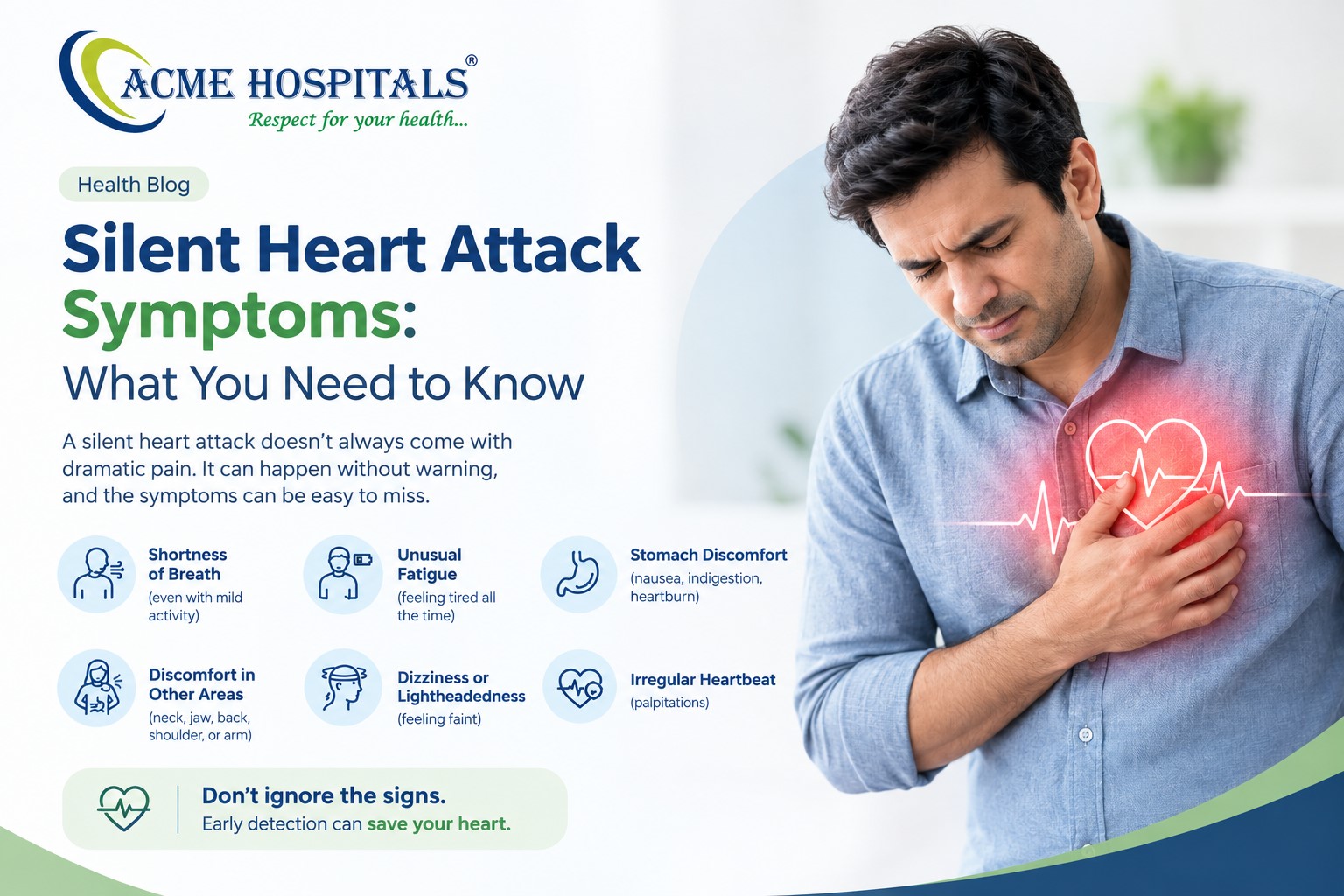
What Is a Silent Heart Attack? (Silent Attack Meaning)
A silent attack (also known as silent MI or silent myocardial infarction) is a heart attack that occurs with mild or unusual symptoms. Because the signs are not dramatic, people often ignore them or mistake them for indigestion, tiredness, or stress.
Even though the symptoms are quiet, the damage to the heart muscle is real.
Silent Heart Attack Symptoms
Common silent heart attack symptoms include :
- Unusual or extreme fatigue
- Mild pressure or discomfort in the chest, jaw, neck, or back
- Shortness of breath during light activity
- Nausea, indigestion, or stomach discomfort
- Cold sweat
- Lightheadedness or dizziness
- Flu-like feeling without fever
What are the 4 silent signs of a heart attack?
Doctors often highlight these four warning signs :
- Extreme or unexplained tiredness
- Mild chest discomfort or pressure
- Shortness of breath
- Pain or discomfort in the jaw, neck, back, or arms
These silent attack symptoms should never be ignored.
Silent Heart Attack Causes and Reasons
The main silent heart attack causes are the same as regular heart attacks — a blockage in the coronary arteries that reduces blood flow to the heart muscle.
Common reasons of silent heart attack and risk factors include :
- High blood pressure
- High cholesterol
- Diabetes
- Smoking
- Obesity
- Family history of heart disease
- Lack of physical activity
- Increasing age
Silent heart attack age risk rises after 45 in men and 55 in women, but it can also occur in younger adults who have multiple risk factors.
Why Silent Heart Attacks Are Dangerous
Because symptoms of a silent heart attack are mild, many people delay getting medical help. This can lead to :
- Greater damage to the heart muscle
- Higher risk of heart failure later
- Increased chance of another heart attack
Often, a silent heart attack is only discovered during a routine ECG, echocardiogram, or when a more serious cardiac event happens later.
What To Do If You Notice These Symptoms
If you experience any unusual symptoms — even mild ones — take them seriously.
- Seek emergency medical care immediately
- Note the time when symptoms started
- Do not drive yourself if possible
Early treatment can limit the damage and improve long-term outcomes.
Heart Care at Acme Hospital
At Acme Hospital, our emergency and critical care team is available 24/7 to evaluate and treat heart-related emergencies, including silent heart attacks. With advanced diagnostic facilities and a well-equipped ICU, we provide rapid assessment and care when every minute counts.
If you or someone you know has experienced unexplained fatigue, mild chest discomfort, or other concerning symptoms, don’t wait. Early medical attention can make a life-saving difference.
Need urgent care?
Visit Acme Hospital or contact our emergency team right away.
