Introduction
Few things trigger parental anxiety faster than waking up your baby or toddler to find mysterious red spots, bumps, or patches across their skin. Children's skin is thinner, more sensitive, and still building immunity, making rashes one of the single most common reasons parents visit our Department of Pediatrics.
While the vast majority of common childhood skin rashes are harmless and resolve with basic home care, some rashes are early warning signs of contagious infections or serious systemic conditions that require immediate medical intervention.
To help you decode your child's symptoms, the pediatric and critical care specialists at Acme Hospital have compiled this comprehensive childhood skin rash guide—covering everything from routine newborn spots to urgent warning signs.
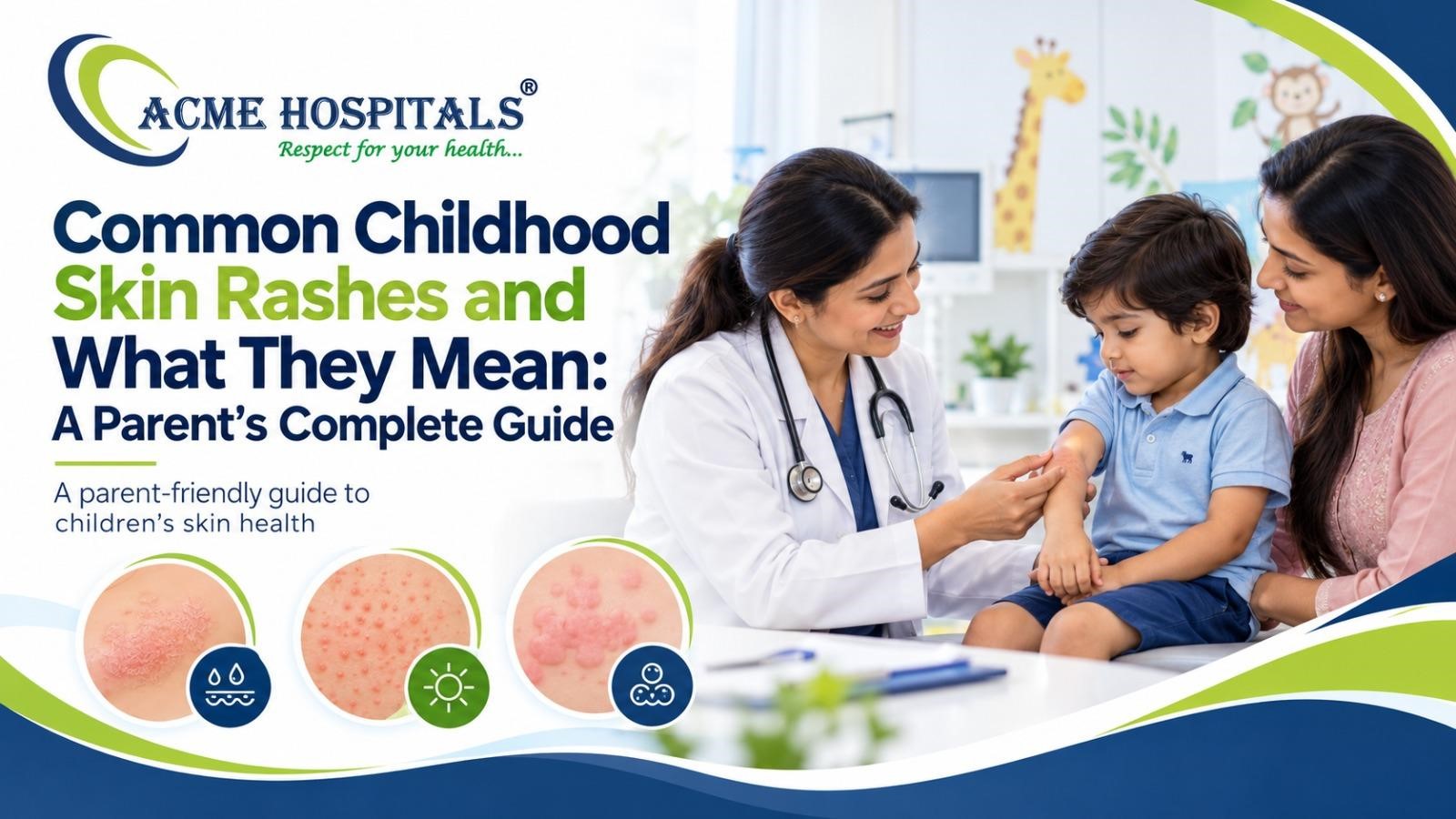
Quick-Reference: Childhood Skin Rash Decoder
| Rash Name | What It Looks Like | Common Locations | Key Accompanying Symptoms | Typical Cause |
|---|---|---|---|---|
| Eczema (Atopic Dermatitis) | Dry, rough, red, scaly, and intensely itchy patches. | Cheeks (in infants), inner elbows, and behind the knees. | Skin thickening from scratching; usually no fever. | Skin barrier sensitivity and allergies. |
| Heat Rash (Miliaria) | Tiny pink or red pinprick bumps or minuscule water blisters. | Neck folds, upper back, chest, and diaper line. | Mild prickling itch that worsens in warm weather. | Blocked sweat ducts. |
| Hand, Foot and Mouth Disease (HFMD) | Flat red spots or small grayish-white oval blisters. | Palms, soles of the feet, buttocks, and inside the mouth. | Sore throat, drooling, low-grade fever, and poor appetite. | Viral infection, commonly caused by Coxsackievirus. |
| Roseola (Sixth Disease) | Rosy-pink, flat or slightly raised spots that fade when pressed. | Starts on the chest or tummy, then spreads to the neck and arms. | Appears after a 3–5 day high fever suddenly breaks. | Viral infection (Human Herpesvirus 6). |
| Impetigo | Red sores that burst and leave thick, honey-colored crusts. | Around the nose, mouth, and hands. | Itchy, mildly tender sores that spread rapidly via touch. | Bacterial infection (Staph or Strep). |
| Hives (Urticaria) | Raised, swollen pink or red welts with pale centers that shift location. | Anywhere on the body; welts may merge into large patches. | Intense itching; sudden onset within minutes or hours. | Allergic reaction, viral illness, or stress. |
1. Everyday Newborn & Infant Skin Rashes
Newborn skin undergoes dramatic adaptation after birth. If your baby recently graduated from maternity care or our Level III NICU (Neonatal Intensive Care Unit), you will likely notice a few of these common infant rashes:
- Erythema Toxicum Neonatorum: Despite the intimidating medical name, this affects many full-term newborns during their first week of life. It looks like small yellowish-white bumps surrounded by a blotchy red halo, often compared to tiny flea bites. It is generally harmless and disappears on its own within about two weeks.
- Diaper Dermatitis (Diaper Rash): Caused by prolonged moisture, friction, or changes in the skin's pH due to urine and stool. Standard irritant diaper rash looks like smooth, bright red skin over the convex surfaces of the bottom. Tip: If the rash settles deep inside the skin creases and features tiny red "satellite" dots around the border, it may be a Candida yeast infection and requires assessment by your pediatrician for appropriate antifungal treatment.
- Cradle Cap (Seborrheic Dermatitis): Greasy, yellowish, scaly patches on a baby's scalp. It is not caused by poor hygiene and usually does not itch. Gently massaging a small amount of baby-safe mineral oil onto the scalp before washing can help loosen the flakes. Avoid leaving oil on the scalp for prolonged periods, and follow your pediatrician's advice.
- Prickly Heat (Miliaria): Babies cannot regulate their body temperature as efficiently as older children. Over-bundling or humid weather can trap sweat beneath the skin, creating clusters of tiny red bumps on the neck, shoulders, and chest. Cooling the room and dressing your baby in a single layer of breathable cotton can help clear the rash.
2. Contagious Viral Rashes in Toddlers and School-Age Kids
Viral rashes, known medically as viral exanthems, frequently accompany fevers and upper respiratory symptoms. Because antibiotics do not work against viruses, treatment generally focuses on hydration, rest, and fever relief when appropriate.
Hand, Foot, and Mouth Disease (HFMD)
Extremely common in daycares and preschools, HFMD often begins with a mild fever and painful sores inside the mouth that can make swallowing difficult. Within 24 to 48 hours, small red spots and blisters may appear on the palms, soles, and diaper area. Keep your child hydrated with cool fluids and consult our Outpatient Pediatric Clinic if mouth pain prevents them from drinking.
Fifth Disease ("Slapped Cheek" Syndrome)
Caused by Parvovirus B19, this illness often starts with mild cold-like symptoms, followed a few days later by a striking, bright-red rash across both cheeks and a lacy pink rash on the trunk and limbs. By the time the characteristic cheek rash appears, a child is typically no longer contagious, although contagiousness can vary depending on the stage of infection and the individual's immune status.
Roseola Infantum
Roseola commonly affects children between 6 months and 2 years of age. It often causes a sudden high fever, sometimes exceeding 103°F (39.4°C), for three to five days, with few other symptoms. As the fever subsides and the child begins feeling better, a blotchy pink rash may appear across the torso. The rash usually fades on its own over the following days.
Chickenpox (Varicella)
While less common in populations with widespread vaccination, chickenpox causes intensely itchy crops of red bumps that quickly develop into fluid-filled blisters before crusting over into scabs. Learn more about our Childhood Vaccination & Immunization Programs to understand the recommended immunization options for your child.
3. Bacterial, Fungal, and Allergic Rashes
Unlike many viral rashes, bacterial and fungal skin conditions may require targeted medicated creams or oral medications to treat the infection and prevent it from spreading.
- Eczema (Atopic Dermatitis): A chronic condition in which the skin struggles to retain moisture, leading to dry, red, intensely itchy flare-ups. Management relies on daily fragrance-free emollients, such as thick creams or ointments, lukewarm baths, and prescribed topical medications when needed. Our Pediatric Dermatology Specialists can help develop an appropriate treatment plan.
- Impetigo: When bacteria, such as Staphylococcus or Streptococcus, enter a tiny scratch, insect bite, or eczema patch, they can cause red sores that ooze and develop a characteristic golden, honey-coloured crust. Impetigo is highly contagious and may require prescription antibiotic ointment or oral antibiotics.
- Ringworm (Tinea Corporis): Despite its name, no worms are involved. This superficial fungal infection creates a coin-shaped patch with a raised, scaly red outer ring and a clearer centre. Appropriate antifungal treatment can resolve the infection, often within two to four weeks, depending on its severity and response to treatment.
4. Red Flag Warning Signs: When a Rash Requires NICU or PICU Emergency Care
While many rashes can be evaluated during a scheduled clinic visit, certain skin changes may indicate serious conditions such as meningococcemia (a severe bloodstream infection), anaphylaxis, Kawasaki disease, or Staphylococcal Scalded Skin Syndrome (SSSS).
At Acme Hospital, our 24/7 Pediatric Emergency & Trauma Center works alongside specialized NICU services and our PICU (Pediatric Intensive Care Unit) to manage critical pediatric emergencies.
Perform the "Glass Test" Immediately
If your child has a fever and spots that look like tiny pinprick blood spots (petechiae) or unexplained purple bruises (purpura), press the side of a clear drinking glass firmly against the rash, without delaying medical care.
- Blanching Rash: If the spots turn white or fade under pressure, the rash is blanching. Many common viral rashes behave this way.
- Non-Blanching Rash (MEDICAL EMERGENCY): If the red or purple spots remain clearly visible through the glass, seek emergency medical care immediately, particularly if your child has a fever or appears unwell. A non-blanching rash can signal a serious infection, including sepsis or meningitis. Do not rely on the glass test to rule out an emergency.
Rush to the Emergency Room If You Notice:
- A Rash in a Newborn Under 28 Days Old with Fever: Any fever of 100.4°F (38°C) or higher in a newborn requires urgent medical evaluation. Blister-like or pustular rashes in a neonate also need prompt assessment to rule out conditions such as neonatal herpes or a serious bacterial infection. Hospital admission, including NICU care, may be necessary.
- Signs of Anaphylaxis (Severe Allergic Reaction): Hives accompanied by swelling of the lips, tongue, or face, wheezing, a hoarse voice, persistent vomiting, or difficulty breathing require emergency care. Use prescribed emergency medication, such as an epinephrine auto-injector, if available, and call emergency services.
- Blistering or Peeling Skin Near the Eyes or Mouth: Widespread painful red skin that blisters and peels, or sores involving the lips and eyes, requires immediate medical evaluation and may need PICU-level stabilization.
- High Fever Lasting 5+ Days with "Strawberry Tongue": A body rash accompanied by bloodshot eyes, cracked red lips, swollen hands or feet, and prolonged fever may indicate Kawasaki disease, which requires prompt medical assessment and treatment to protect the heart.
- Lethargy or Altered Behaviour: Seek urgent medical care if your child is unusually floppy, difficult to wake, inconsolably irritable, has a stiff neck, or is working hard to breathe.
Safe At-Home Comfort Tips for Mild Rashes
While waiting for your pediatrician's appointment, keep your child comfortable with these safe, skin-friendly measures, provided no emergency warning signs are present:
- Cool It Down: Use cool compresses or lukewarm baths to calm inflamed, itchy skin. Colloidal oatmeal products formulated for children may help soothe itching. Avoid hot water.
- Pat, Don't Rub: Gently pat the skin dry with a soft cotton towel and immediately apply a plain, fragrance-free moisturiser or barrier ointment if the skin is dry.
- Trim Fingernails: Keep your child's nails short and smooth. Cotton mittens may be useful for infants when appropriate and supervised. This can reduce scratching and the risk of secondary skin infections.
- Hold Off on Leftover Creams: Never apply adult steroid creams, leftover antibiotic ointments, or herbal pastes to an undiagnosed childhood rash without medical advice. Inappropriate steroid use can worsen certain fungal infections or mask symptoms that need assessment.
Expert Pediatric Care Under One Roof at Acme Hospital
Whether your toddler needs relief from persistent eczema or your newborn requires specialised monitoring in our advanced NICU or PICU, Acme Hospital's multidisciplinary pediatric team can help assess your child's needs and guide you towards appropriate care.
Book an Appointment with an Acme Hospital Pediatrician Today.
📞 Contact ACME Hospital
- Dermatology Department : Available for consultations, diagnosis, and treatment of skin conditions in infants and children.
- 24/7 Appointment Hotline : 8655006565
- Online Booking : www.acmehospital.com
- Department : Department of Pediatrics , Neonatal Intensive Care Unit
- Specialised Care : Childhood Skin Rashes , Infant Skin Conditions
